What is a print?
An original print is a work of art usually produced in multiples. Unlike a drawing or painting, the work is created through an indirect transfer process. The artist creates the image on a surface called a matrix and transfers the design onto paper. Tools are used to create different marks on the matrix; ink is then applied and pressure from a printing press transfers the image onto the paper. The process can be repeated by re-inking the matrix, creating an edition in which each print is identical.
When a print is editioned, the artist is bound not to exceed, extend, or re-edition that same image. Once the full edition has been made, the printing matrix is retired so that no more prints can be produced.
Techniques
Etching
Etching is a method of intaglio printmaking in which an image is incised into the surface of a plate and filled with ink.
A metal plate, usually copper or steel, is covered with a layer of acid-resistant wax called the ground. An image is drawn onto the plate by scraping through the ground with an etching needle, exposing the metal underneath. The plate is then placed in acid, which eats or ‘bites’ into the lines of the image. Tone can be created using aquatint, a technique in which rosin dust is adhered to the plate using heat, forming small areas of tone when the plate is etched.
The plate is then cleaned and inked. The ink is held in the grooves, and when the plate is passed through a press with a sheet of paper on top, the design is transferred onto the paper.
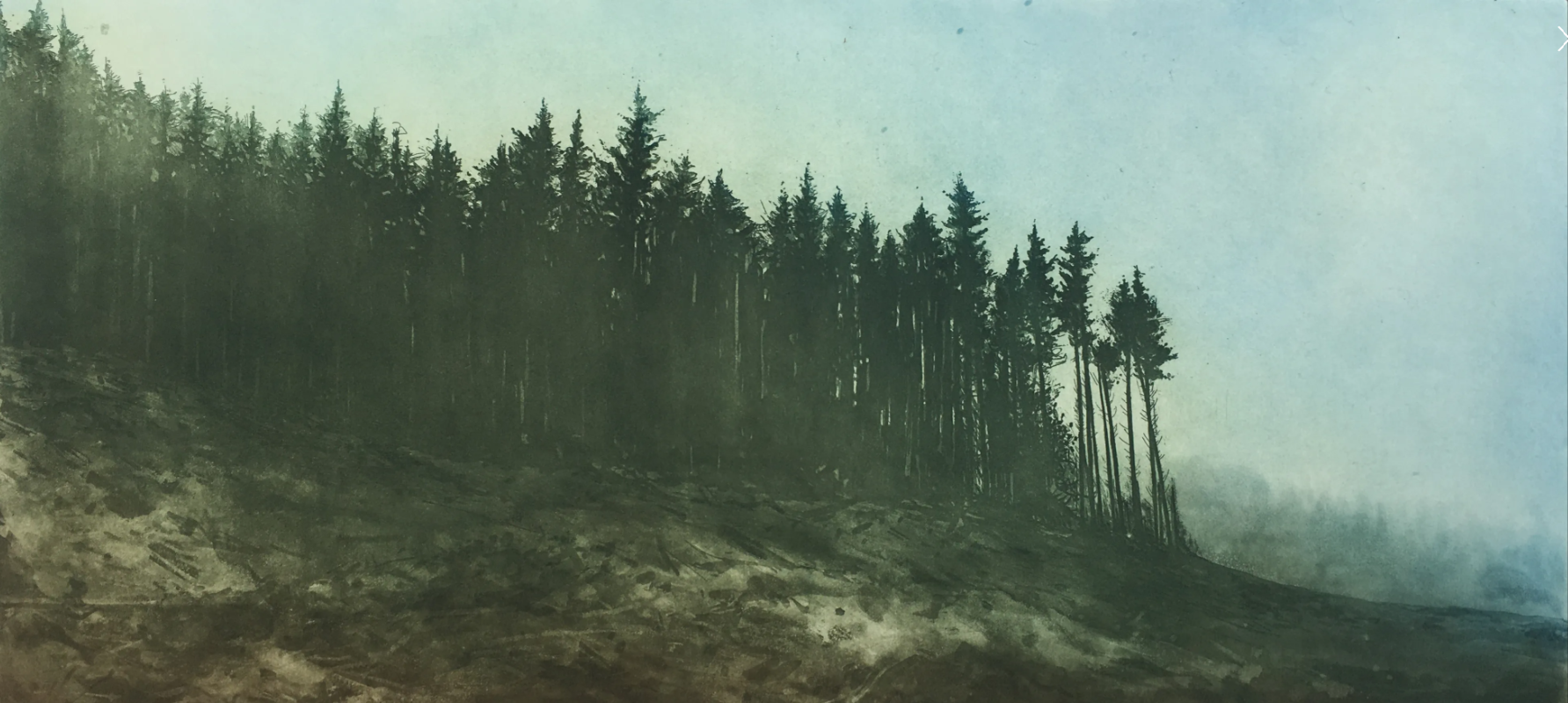
‘Treeline II’ - Etching
Mezzotint
A mezzotint is an engraving technique that allows for the creation of prints with soft gradations of tone and rich blacks.
A textured surface is created on a metal plate using a rocker tool. By burnishing the plate, the pitted areas are flattened. In this way, lighter tones are created as the polished areas reduce the ink-holding capacity of the plate.
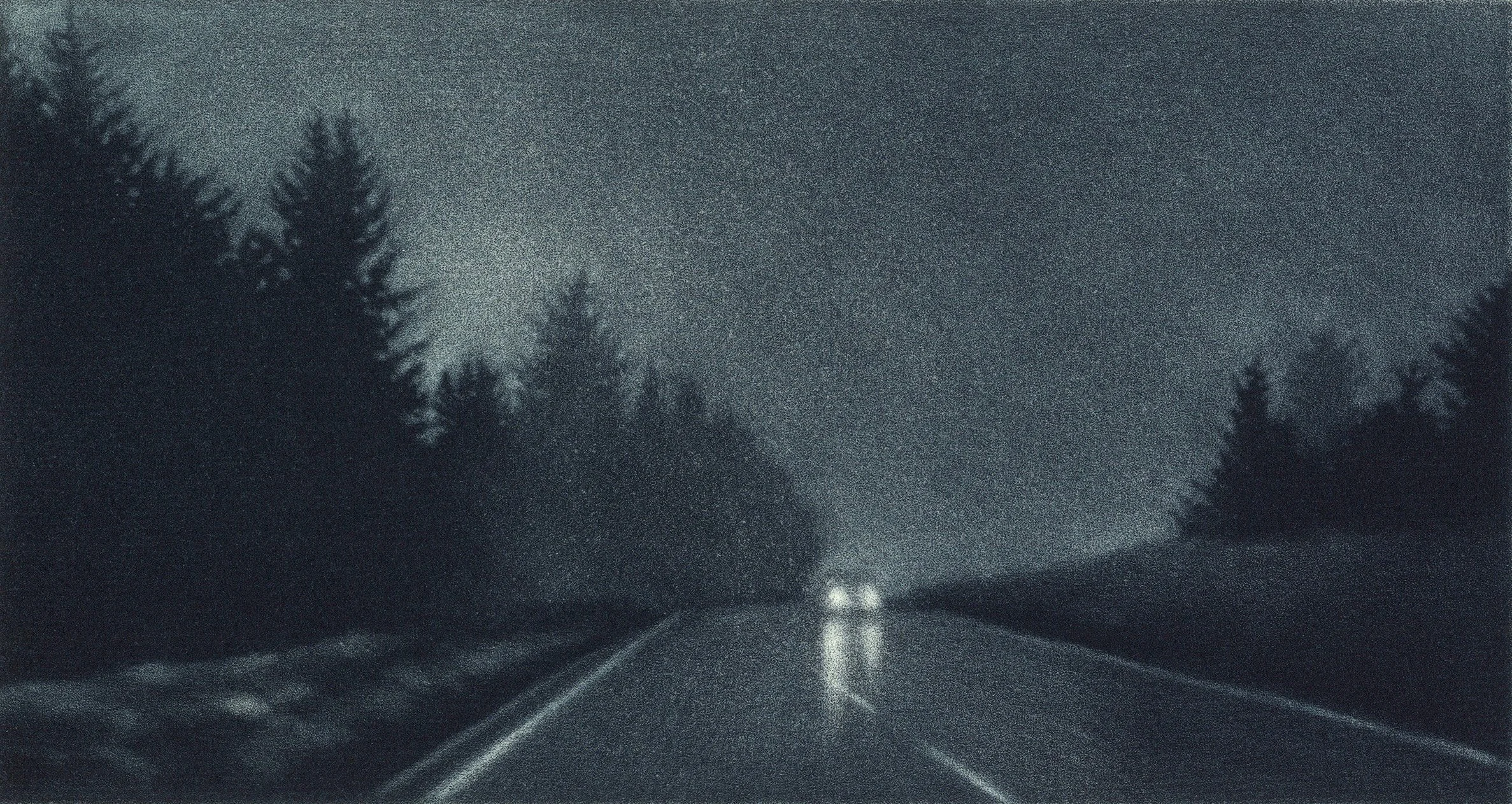
‘Night Drive Home’ - Mezzotint
Drypoint
Drypoint is an intaglio printmaking method that involves scratching an image into a plate with a pointed tool. The process is similar to using a pen without ink — a dry point — to create an impression of a drawing which, when inked, can be printed multiple times.
The scratched lines create a burr that holds ink, meaning that the print reveals the drawing. Damp paper is placed on the plate and run through a press, picking up the ink from the incised lines and the burr, resulting in a characteristically fuzzy line.
Drypoint is a simpler technique than etching, as it requires less specialist equipment and no chemicals or acids. Drypoint plates can be made from copper, zinc or plastic.
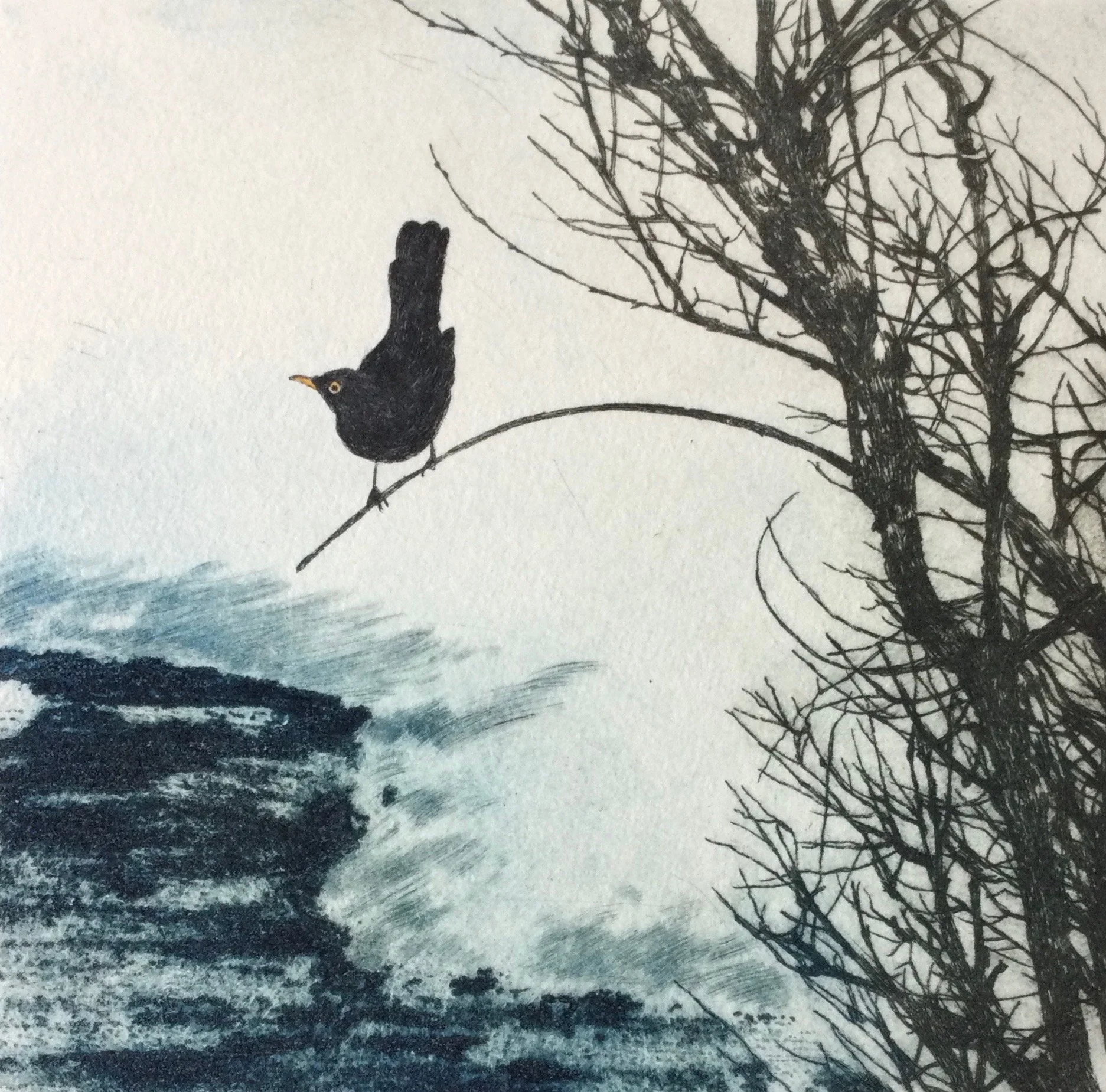
‘Blackbird’ - Drypoint
Stone Lithography
A lithograph is printed from an image that has been drawn onto the surface of a flat stone or metal plate and uses the mutual repulsion of grease and water. The term itself comes from the Greek words for stone (litho) and drawing (graph).
The image is drawn using an oily or greasy crayon or ink. The surface is then dampened with water, which is repelled by the greasy areas. Oil-based ink is then applied, sticking only to the greasy image, which is subsequently pressed onto paper.
Lithography can give a print a unique painterly or drawing quality.
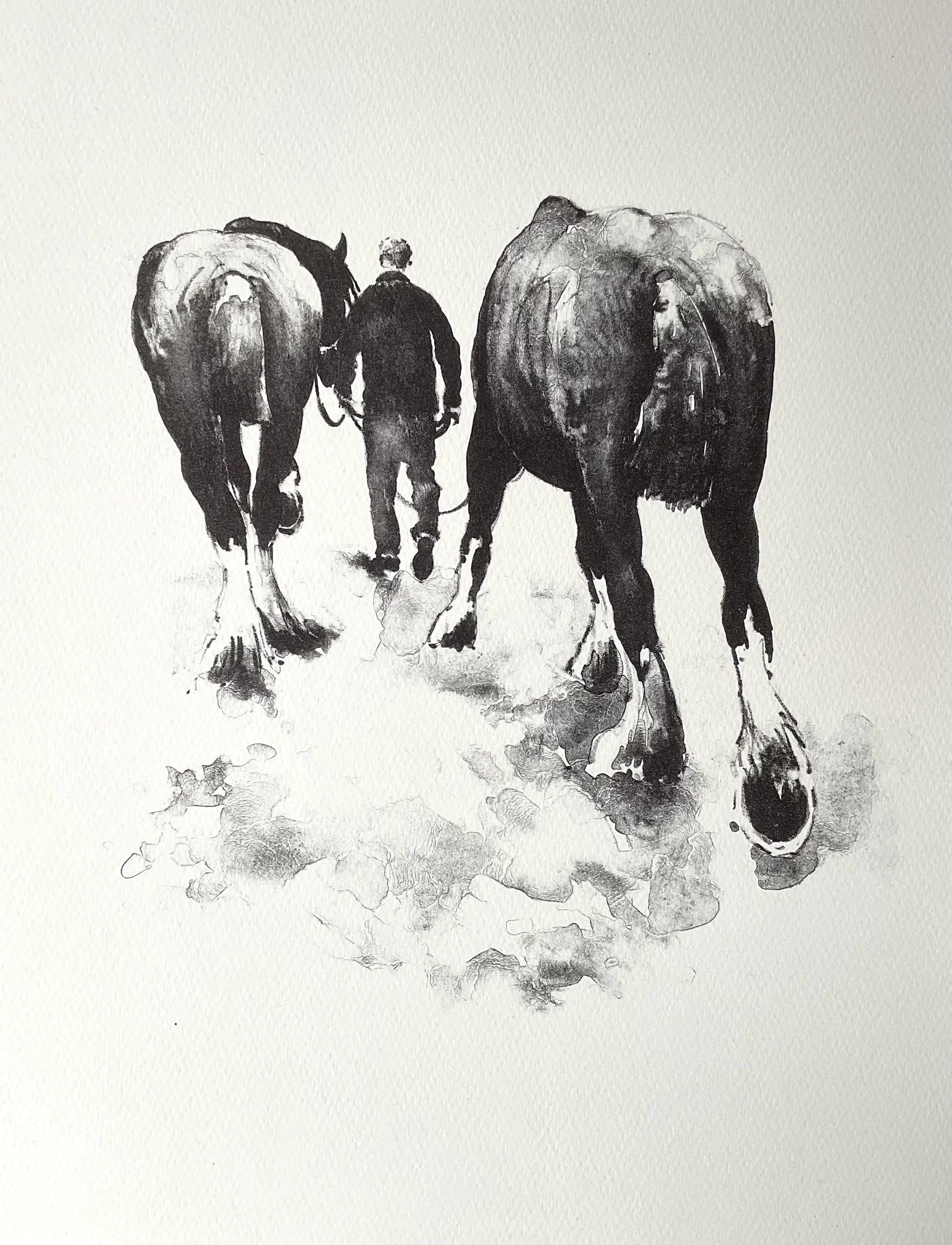
‘They worked hard Today’ - Lithograph
Monotype
A monotype is a genuine one-of-a-kind print. Unlike other printmaking methods that create multiple identical copies, a monotype produces only one finished print. An image is painted onto a non-absorbent surface, such as glass or perspex. Paper is then placed on top, and pressure is applied using a press. Monotypes allow the artist to work in a natural manner and often have a painterly appearance.
An image may be built up through several printings, but there is only one finished image at the end. Monotypes are therefore often editioned as 1/1.
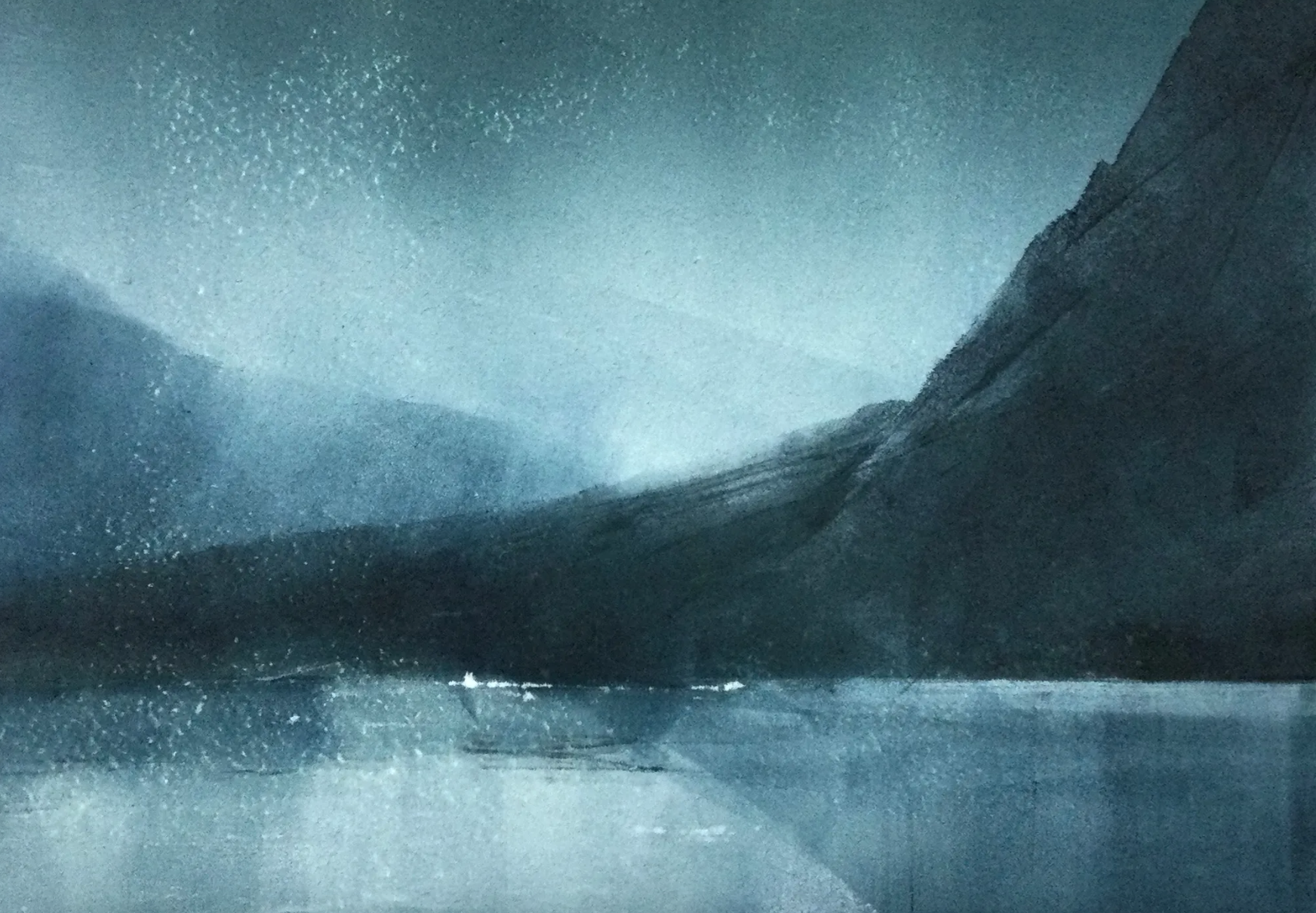
‘Quiet Loch’ - Monotype